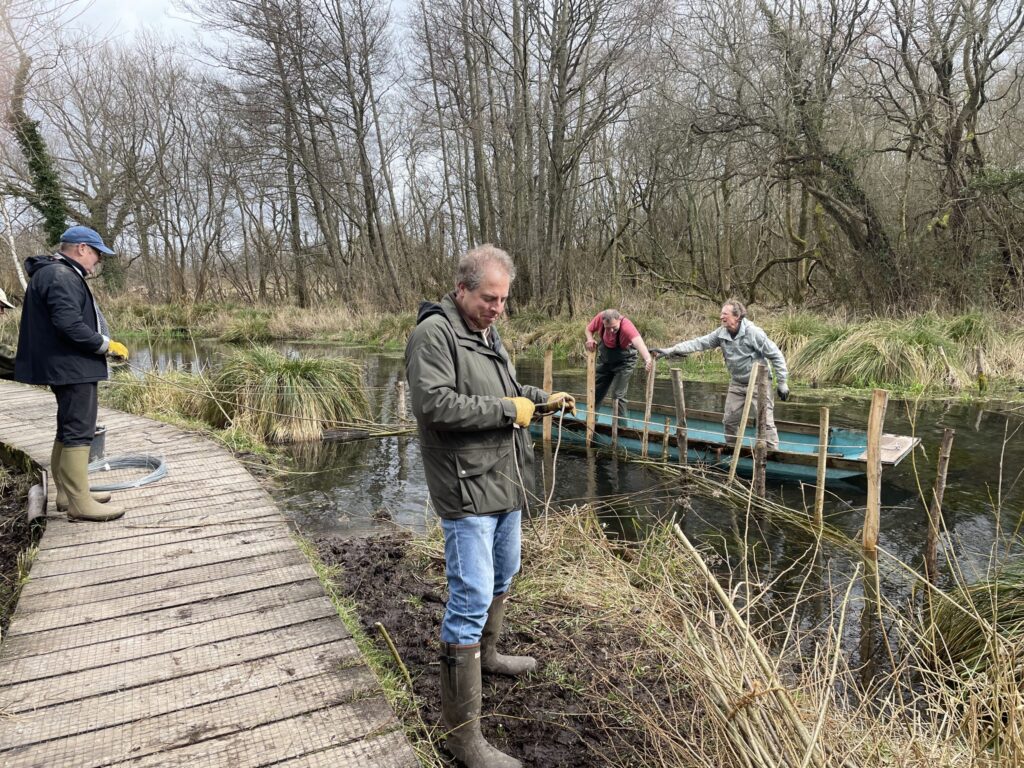

Volunteers on the riverbank
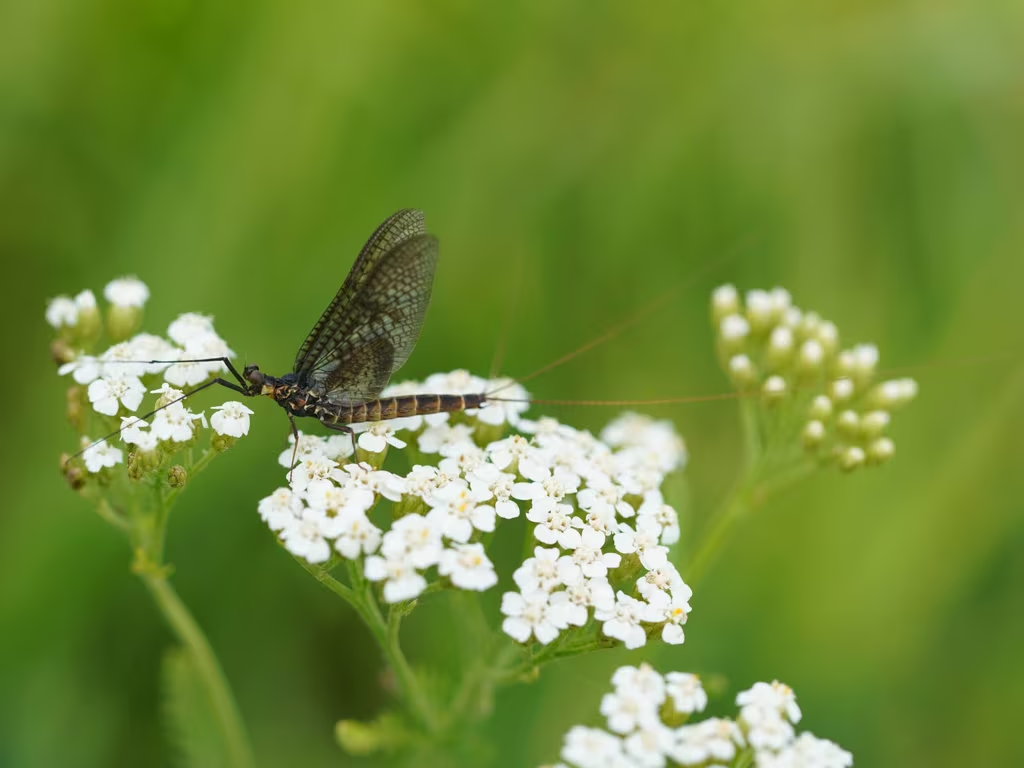
Official agency monitoring is constrained by limited resources and so citizen science has become a vital component to complement and help to more effectively monitor river conditions. Organisations such as The Riverfly Monitoring Initiative (RMI), run nationally by the Riverfly Partnership, trains volunteers to sample river invertebrates such as mayflies, caddisflies and stoneflies. These creatures spend most of their life cycle in the river with known sensitivities to changes in water quality. They have limited mobility, long life-cycles, which makes them reliable indicators of a river’s health. Used alongside routine Environment Agency monitoring, the RMI scheme allows water quality to be checked more comprehensively, with remedial action triggered quickly if severe pollution is detected.
On the Whitewater specifically, this citizen science has deep roots. The Whitewater Valley Conservation Society (formerly the Whitewater Valley Preservation Society) has amassed riverfly survey data stretching from 2017–2019 through to a renewed 2025 survey, working with the freshwater conservation charity WildFish. These surveys have been conducted and paid for thanks to the generosity of our supporters and riparian owners. This has enabled the WVCS to create a nine-year archive that is unusual for a river of this size.
Monitoring Surveys and Outcomes
The Society is candid about both what surveys show and their limitations. Because ecological change in rivers is normally gradual, and seasonal timing and weather both confound comparisons (autumn pollutants tend to bite harder than spring ones), caution needs to be exercised when observing trends over a 2-3 survey period.
Nevertheless, the 2025 resurvey when compared against the 2017–2019 baseline surveys found a broadly encouraging picture on some pressure indicators:
- siltation pressure has eased on average, along with some reduction in flow- and phosphorus-related stress,
- organic enrichment stayed roughly stable
- chemical impact ticked up slightly
- Diversity - both across all invertebrates and within the riverfly groups specifically - was lower in 2025 than in the earlier surveys, even though overall abundance rose
- Invertebrate family-level metrics suggested the proportion of higher-scoring, pollution-sensitive taxa had increased.
- WildFish’s commentary on the data flagged a more concerning detail buried in that headline: at most sites, beetles, molluscs and caddisflies had almost disappeared, and the rise in mayfly abundance seemed to be driven by more pollution-tolerant families (like Baetidae) rather than more sensitive ones (like Heptageniidae).
WildFish suggested the fall in molluscs at some sites could reflect either a genuine reduction in sediment pressure or predation by the invasive American signal crayfish, the same species the Environment Agency separately names as a driver of the river’s fish and habitat problems, and admitted the two explanations are difficult to disentangle from simple before-and-after comparisons.
The WVCS has resisted declaring the river “improved” on the strength of the latest 2025 survey and is seeking reference biometric benchmarks from WildFish for what a healthy chalk stream of the Whitewater’s type should look like.
The WVCS has also flagged American (signal) crayfish as a recurring concern throughout its survey sites, both for their direct predation on invertebrates and for the bank erosion and siltation caused by their burrowing, echoing, from citizen-science data, the same pressure the Environment Agency identifies from its own monitoring.
Related Activities
Further downstream in the catchment, the South East Rivers Trust has combined physical habitat restoration with citizen science, installing tonnes of gravel at Bassetts Mead near Hook to recreate the pools and riffles fish need for spawning, while running training days in which local families learn to identify invertebrates and carry out riverfly monitoring for themselves.