

Restoring the source: Greywell Fen
Upstream, at the river’s origin, restoration work has been under way at Greywell Fen, the 38-hectare SSSI wetland where the Whitewater’s spring water first emerges. The fen was designated for its habitat and species such as marsh helleborine, marsh valerian and marsh fern, historically kept open by grazing and coppicing. Where grazing lapsed in past decades, alder and willow scrub encroached, reducing botanical diversity, a common fate for unmanaged fen habitats.
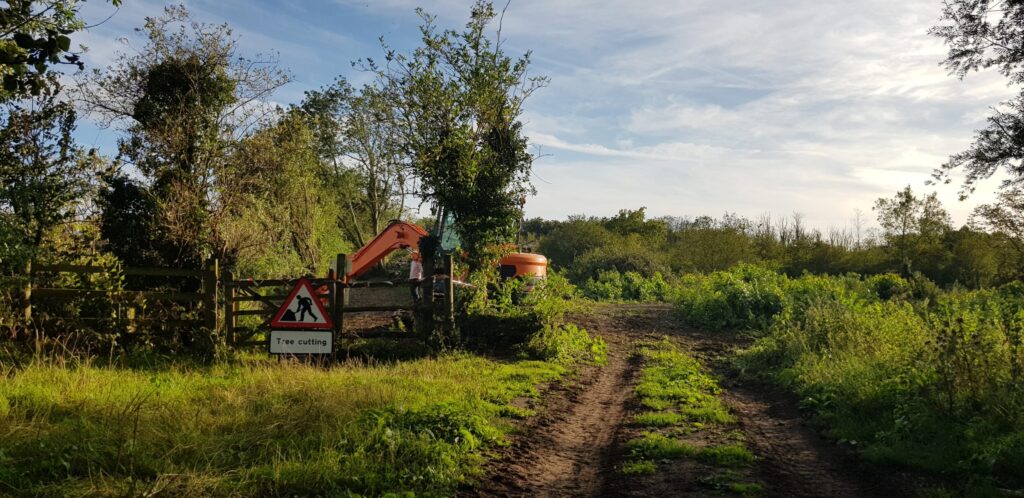
A 13-hectare portion of the SSSI, Greywell Moors, has been a nature reserve managed by the Hampshire & Isle of Wight Wildlife Trust since 1989, and the Trust has run a long-term programme there of clearing encroaching scrub and reinstating cattle grazing to break up dense sedge stands and restore open fen conditions; its conservation grazing herd can still be seen on the reserve. More recently, the wider Greywell Hill Estate, whose land adjoins the reserve and forms part of the same SSSI, entered Defra’s Higher Tier Countryside Stewardship scheme, with Natural England’s encouragement, to fund a further phase of restoration on its own land, including re-fencing to allow cattle back onto the fen. That grazing, once established, was set to be run under the Wildlife Trust’s management, extending its conservation grazing approach across a larger area of the fen. Because Greywell Fen sits at the literal source of the Whitewater’s flow, the ecological condition of the whole site, not just the formal nature reserve, has knock-on implications for water quality as it enters the river system.
The pressures at play
Over-abstraction of groundwater and the growing stress of a changing climate on already low, stable chalk stream flows sit behind many of the more immediate pressures. Locally, the Whitewater Valley Conservation Society has also highlighted the risks that new development in the river’s floodplain could pose. Increased building compounding the effect in an already water-stressed catchment area with a sewage network that is already running close to capacity in places. Sewage overflows in flood conditions and agricultural run-off affect oxygen levels in the river.
Why it matters
Chalk streams are sometimes described as England’s equivalent of a coral reef: globally rare, biologically rich, and disproportionately vulnerable to disturbance given how little water buffers them. The Whitewater’s monitoring record, an official Poor classification sitting alongside a High rating for invertebrates, and a citizen-science archive candid about what it can and can’t yet prove, offers something valuable precisely because it resists a simple headline. It shows a river with genuine ecological strengths (clean, oxygen-rich water and a healthy invertebrate community by the Environment Agency’s own measure) undermined by specific, identifiable pressures: sewage infrastructure, physical barriers, and an invasive crayfish species that both regulators and volunteers independently flag as a problem.
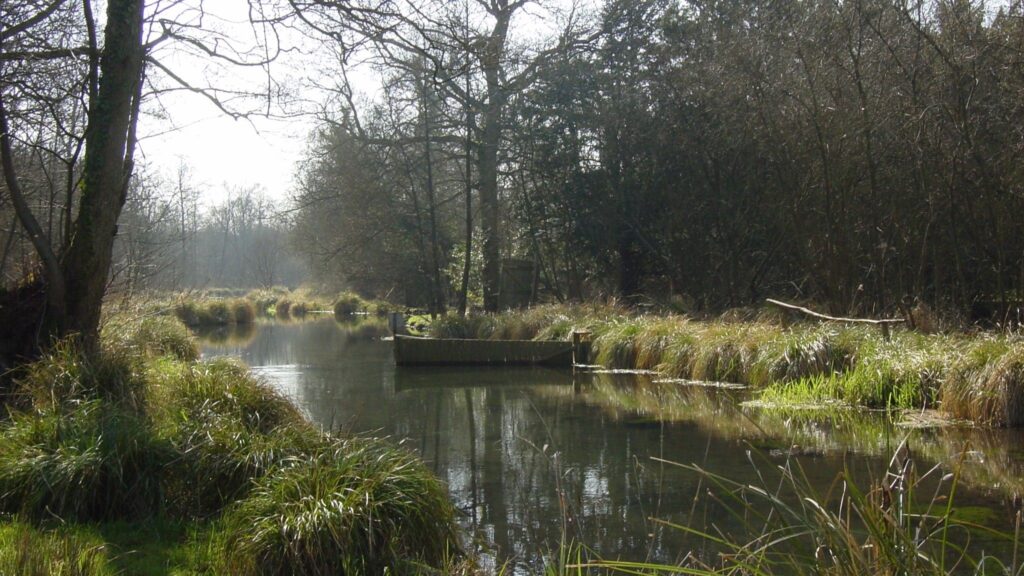
That combination of official data and sustained local monitoring matters most for a stream whose upper reaches near Greywell Fen still show the clarity and stability that make chalk streams special, and whose lower reaches are a live test of whether pollution control, habitat restoration and careful planning can hold that quality as building pressure in north-east Hampshire continues to grow. With the Environment Agency’s own timetable for Good status stretching out to 2027 on “low confidence,” continued volunteer monitoring - and the pressure that comes with it - looks set to remain essential to tracking whether that improvement actually arrives.
For more information see: Developments: Water Abstraction
Sources: Environment Agency Catchment Data Explorer (Whitewater water body GB106039017240); Whitewater Valley Conservation Society, including its Riverfly surveys review and reporting on Greywell Fen restoration; Hampshire & Isle of Wight Wildlife Trust (Greywell Moors nature reserve and conservation grazing programme); Natural England / Greywell Fen SSSI citation; Chalk-Streams (chalkstreams.org); The Riverfly Partnership; South East Rivers Trust.